Native Hydrangeas: Beautiful Lowmaintenance And Good For The Environment
Native Hydrangeas: Beautiful, Low-Maintenance, and Good for the Environment
Hydrangeas are some of the most popular flowering shrubs in the world. They come in a wide variety of colors, sizes, and shapes, and they can add a touch of elegance to any garden. But what many people don't know is that there are also a number of native hydrangeas that are just as beautiful and easy to care for.
Native hydrangeas are a great choice for gardeners who are looking for plants that are low-maintenance and good for the environment. They are typically more resistant to pests and diseases than non-native hydrangeas, and they require less water and fertilizer. They also help to support local wildlife, as they provide food and shelter for birds, butterflies, and other insects.
If you're thinking about adding hydrangeas to your garden, consider choosing native varieties. You'll be rewarded with beautiful flowers, low maintenance, and a healthier environment.
Here are some of the most popular native hydrangeas:
- Oakleaf hydrangea (Hydrangea quercifolia): This large, deciduous shrub is native to the eastern United States. It has large, heart-shaped leaves that turn shades of red, orange, and purple in the fall. The flowers are white or pink and are arranged in cone-shaped clusters. Oakleaf hydrangeas grow best in full sun to partial shade and moist, well-drained soil.
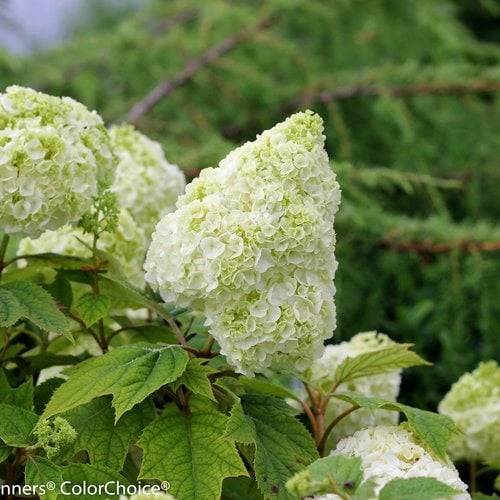
- Smooth hydrangea (Hydrangea arborescens): This smaller, deciduous shrub is native to eastern North America. It has smooth, oval leaves and large, white flowers that are arranged in rounded clusters. Smooth hydrangeas grow best in full sun to partial shade and moist, well-drained soil.
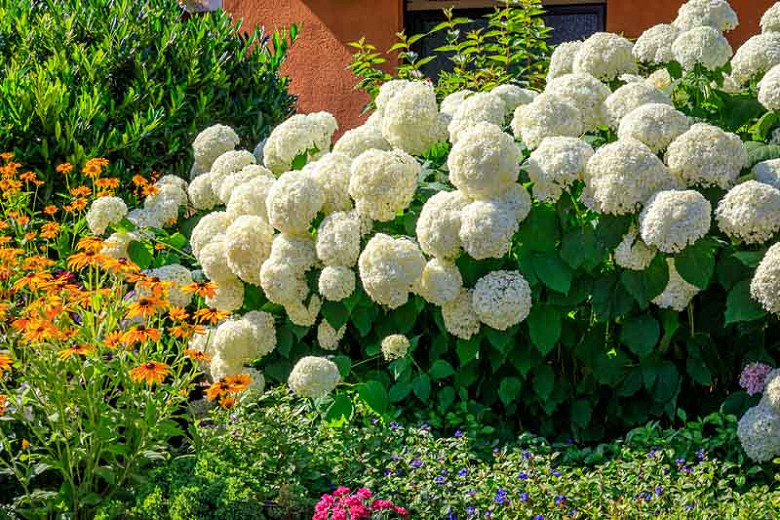
- Panicle hydrangea (Hydrangea paniculata): This large, deciduous shrub is native to eastern Asia. It has long, narrow leaves and large, white, pink, or blue flowers that are arranged in panicles, or cone-shaped clusters. Panicle hydrangeas grow best in full sun to partial shade and moist, well-drained soil.
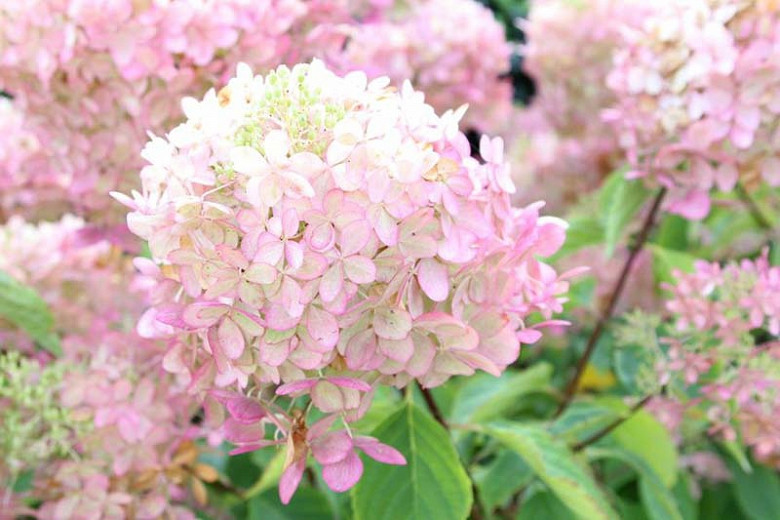
- Hill's hydrangea (Hydrangea villosa): This small, deciduous shrub is native to the southeastern United States. It has hairy leaves and small, white flowers that are arranged in rounded clusters. Hill's hydrangeas grow best in partial shade and moist, well-drained soil.
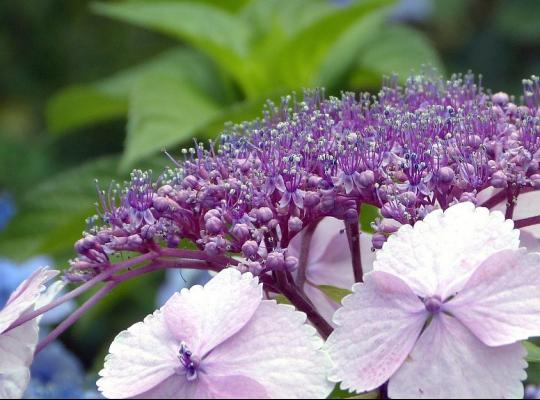
- Mountain hydrangea (Hydrangea serratifolia): This small, evergreen shrub is native to the southern Appalachian Mountains. It has serrated leaves and small, white flowers that are arranged in rounded clusters. Mountain hydrangeas grow best in partial shade and moist, well-drained soil.

These are just a few of the many native hydrangeas that are available. When choosing hydrangeas for your garden, be sure to select varieties that are adapted to your climate and growing conditions.
Caring for native hydrangeas is relatively easy. Most native hydrangeas prefer moist, well-drained soil and partial shade. They can tolerate full sun in cooler climates, but they may need more water in hot, dry climates. Native hydrangeas do not require a lot of fertilizer, but they may benefit from an application of compost or manure in the spring.
Native hydrangeas are generally pest- and disease-resistant. However, they may be susceptible to aphids, scale, and leaf spot. If you notice any pests or diseases, treat them promptly with an insecticidal soap or fungicide.
Native hydrangeas are beautiful, low-maintenance plants that are good for the environment. If you're looking for a new addition to your garden, consider choosing one of these beautiful shrubs.
If you're looking for a beautiful and low-maintenance shrub to add to your garden, consider a native hydrangea. Native hydrangeas are well-adapted to a variety of conditions and can thrive in USDA zones 3-9. They're also deer-resistant and attract pollinators, making them a great choice for both beauty and conservation.
There are many different species of native hydrangeas, each with its own unique characteristics. Some popular choices include:
- Hydrangea arborescens, also known as smooth hydrangea, is a small, mound-shaped shrub with white or pink flowers. It's hardy in zones 3-9 and prefers partial shade.
- Hydrangea quercifolia, also known as oakleaf hydrangea, is a larger shrub with large, panicle-shaped flowers that can be white, pink, or blue. It's hardy in zones 5-9 and prefers full sun to partial shade.
- Hydrangea paniculata, also known as panicle hydrangea, is a tall shrub with large, cone-shaped flowers that can be white, pink, or blue. It's hardy in zones 3-9 and prefers full sun to partial shade.
To learn more about native hydrangeas, visit . This website has a wealth of information on different species of native hydrangeas, as well as tips on how to grow and care for them.
FAQ of native hydrangea
1. What are native hydrangeas?
Native hydrangeas are hydrangeas that are native to a particular region or country. In the United States, there are over 70 species of native hydrangeas, found in a variety of habitats, from forests to swamps. Native hydrangeas are often more cold-hardy and drought-tolerant than non-native hydrangeas, and they can be a valuable addition to any garden.
2. Where can I find native hydrangeas?
Native hydrangeas can be found at many nurseries and garden centers, as well as online. When choosing a native hydrangea, it is important to select a species that is native to your region. This will ensure that the plant will be able to thrive in your climate.
3. How do I care for native hydrangeas?
Native hydrangeas are relatively easy to care for. They prefer full sun to partial shade, and they need well-drained soil. Native hydrangeas are not as heavy feeders as non-native hydrangeas, so they do not need to be fertilized as often. However, they do appreciate a light application of compost or manure in the spring.
4. How do I propagate native hydrangeas?
Native hydrangeas can be propagated by division, cuttings, or seed. Division is the easiest method, and it can be done in the spring or fall. To divide a hydrangea, simply dig up the plant and carefully separate the roots into two or more sections. Each section should have at least a few healthy roots and shoots. Plant the divisions in a well-drained location and water them well.
5. What are some pests and diseases that affect native hydrangeas?
Native hydrangeas are generally resistant to pests and diseases. However, they can be susceptible to scale, aphids, and leaf spot. If you notice any pests or diseases on your hydrangeas, you can treat them with insecticidal soap or neem oil.
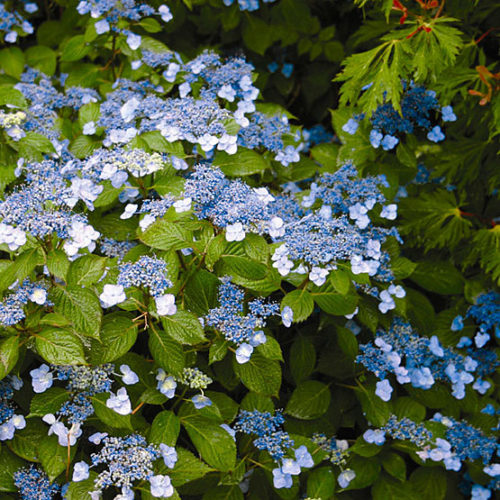
Image of native hydrangea
5 different images of native hydrangeas from pinterest.com:
- Smooth Hydrangea (Hydrangea arborescens) is a deciduous shrub native to eastern North America. It has white or pink flowers that bloom in late spring and early summer.
- Panicle Hydrangea (Hydrangea paniculata) is a deciduous shrub native to eastern Asia. It has large, cone-shaped white, pink, or blue flowers that bloom in late summer and early fall.
- Mountain Hydrangea (Hydrangea macrophylla) is a deciduous shrub native to Japan and Korea. It has large, showy flowers that can be white, pink, blue, or purple.
- Oakleaf Hydrangea (Hydrangea quercifolia) is a deciduous shrub native to eastern North America. It has large, oak-shaped leaves and white flowers that bloom in late summer and early fall.
- Bluebead Hydrangea (Hydrangea involucrata) is a deciduous shrub native to western North America. It has small, white flowers that bloom in late spring and early summer. The flowers are surrounded by blue or purple bracts, which give the plant its name.


Post a Comment for "Native Hydrangeas: Beautiful Lowmaintenance And Good For The Environment"